Chengyu used in simple narratives
This lesson shows how to **weave chengyu (成语)** into short stories. You’ll learn a small narrative toolkit, see model mini-stories, and practice plug-and-play frames you can reuse.
- Chengyu Idioms
- 2 min read
Article 4 of 5 in Basic-Chengyu-for-Beginners/
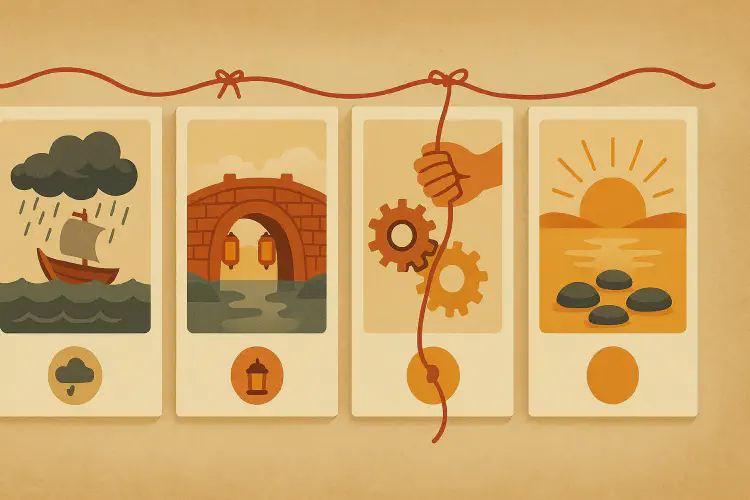
Narrative Toolkit: High-Utility Chengyu for Story Flow
- 一心一意 (yì xīn yí yì) — with one heart and one mind → wholeheartedly
Use to set motivation: 小李一心一意想考上研究生。 - 循序渐进 (xún xù jiàn jìn) — step by step → progress gradually
Use for process: 他循序渐进地复习,每天都打卡。 - 自不量力 (zì bú liàng lì) — not measure one’s strength → overestimate oneself
Use for early mistake/contrast: 起初他自不量力,给自己安排太多任务。 - 亡羊补牢 (wáng yáng bǔ láo) — mend the pen after sheep are lost → fix mistakes in time
Use for turning point: 发现问题后,他马上亡羊补牢,调整计划。 - 事半功倍 (shì bàn gōng bèi) — half the effort, double the result → high efficiency
Use for result: 调整之后,复习事半功倍。 - 功到自然成 (gōng dào zì rán chéng) — when work is enough, success comes → success follows effort
Use for ending: 一年后,理想学校功到自然成。
Model Mini-Stories (Beginner-Friendly)
Story A — The Exam Plan
开学时,小李一心一意准备考试;可他自不量力,第一周就累坏了。老师建议他循序渐进。小李亡羊补牢,重新安排时间。一个月后,学习事半功倍,最终功到自然成。
Story B — The Running Club
我们成立跑步小组。刚开始大家半途而废(不对,应说“有人半途而废”),气氛低落。队长提醒:目标要小,循序渐进。调整后,训练有条不紊,成员互相鼓励、同舟共济,三个月后成功完赛,队里士气蒸蒸日上。
Story C — From Chaos to Order
搬家那天房间乱七八糟。我们分工合作、各司其职,整理井井有条。到晚上,一切焕然一新。
Plug-and-Play Frames You Can Reuse
-
Motivation → Process → Adjustment → Outcome
立志:一心一意
过程:循序渐进 / 有条不紊
调整:亡羊补牢 / 择善而从
结果:事半功倍 / 功到自然成 / 水到渠成 -
Problem → Teamwork → Success
问题:乱七八糟 / 自不量力
合作:分工合作 / 同舟共济 / 齐心协力
成果:焕然一新 / 名副其实(的冠军/团队)
Sentence Patterns for Smooth Narration
- 起因:起初我们一心一意想完成挑战……
- 经过:后来按计划循序渐进,每天记录。
- 转折:中途发现安排自不量力,于是亡羊补牢。
- 结果:效率提高到事半功倍,目标水到渠成。
Quick Substitutions (Same Slot, Different Flavor)
- 过程位:循序渐进 / 有条不紊 / 稳扎稳打
- 团队位:同舟共济 / 齐心协力 / 同甘共苦
- 成果位:功到自然成 / 水到渠成 / 焕然一新
Micro-Practice (Fill-in)
- 发现方法不合适后,我们立刻____,很快恢复进度。→ 亡羊补牢
- 任务分配清晰,大家做事____。→ 有条不紊
- 计划合理,效率高,真是____。→ 事半功倍
Tips for Learners
- 限制每段 1–2 个成语,保证自然度与清晰度。
- 先写白话框架,再把成语放进合适位置。
- 保持时态一致,避免成语堆砌导致逻辑跳跃。
Takeaway: 用少量高频成语搭建“起因—经过—转折—结果”的小故事,表达立刻更精炼、连贯、地道。