
Syntactic roles of chengyu
Most chengyu behave like **adjectival/verb-phrase chunks** you can slot into different parts of a sentence. This lesson shows the main roles, with natural English guidance and Chinese examples (chengyu + pinyin).
Most chengyu behave like **adjectival/verb-phrase chunks** you can slot into different parts of a sentence. This lesson shows the main roles, with natural English guidance and Chinese examples (chengyu + pinyin).
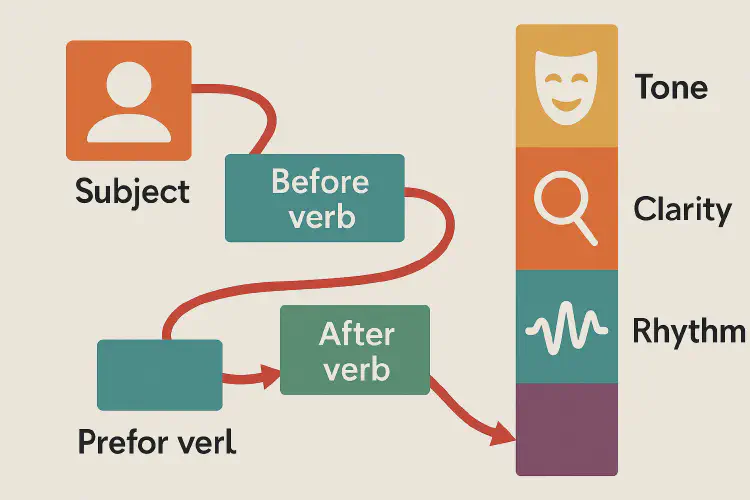
Where you place a chengyu changes **tone**, **clarity**, and **rhythm**. Use Chinese for the idiom + pinyin; keep all explanations and scaffolding in English.
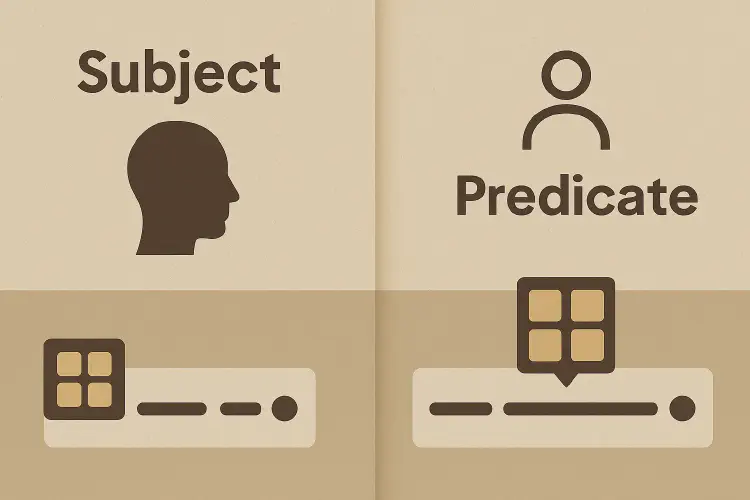
Chengyu (成语) can headline a sentence as the **subject** (to state a principle or theme) or serve as the **predicate** (to describe a state/quality). Use Chinese for the chengyu + pinyin; keep explanations/examples in English.
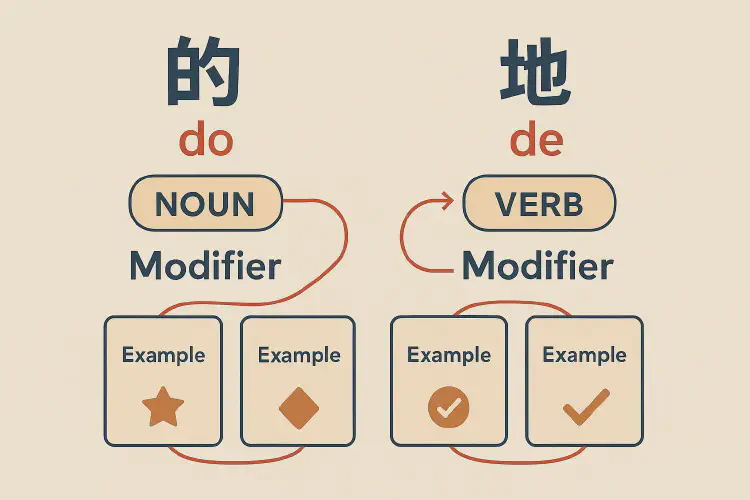
Most chengyu (成语) act like compact adjective/adverb chunks. As **modifiers**, they either (1) sit **before a noun** with **的 de** (attributive) or (2) sit **before a verb** with **地 de** (adverbial). Some action-like idioms can modify a verb **without 地**. Use the chengyu + pinyin in Chinese; keep all guidance in English.
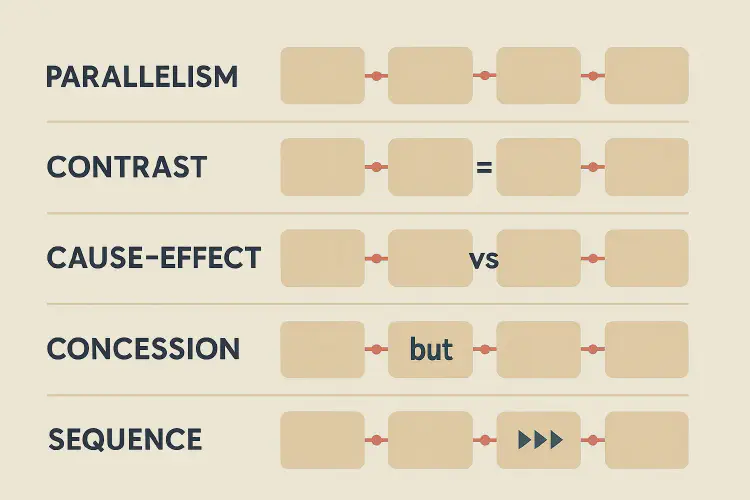
Compound sentences connect two or more clauses. Chengyu (成语) can appear in each clause to create rhythm and logic—**parallelism, contrast, cause–effect, concession, sequence**. Use the idiom (with pinyin) in Chinese; keep all explanations in English.