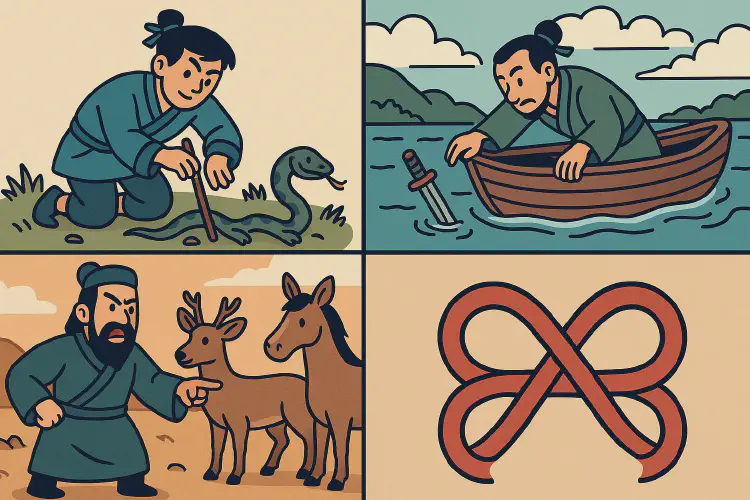
Origin stories of famous chengyu
Behind many **chengyu (成语)** lies a compact story. Learning the **plot → image → moral** makes each idiom easier to remember and use accurately.
Behind many **chengyu (成语)** lies a compact story. Learning the **plot → image → moral** makes each idiom easier to remember and use accurately.
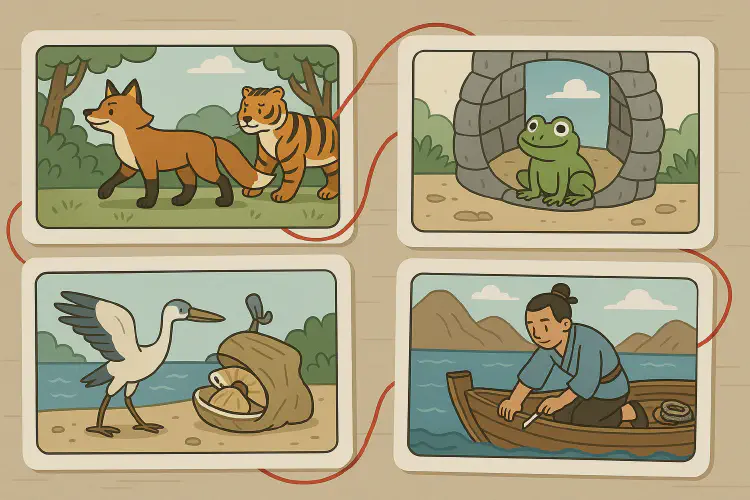
Fables are short, moral stories with talking animals or personified objects. Because **chengyu (成语)** are themselves condensed morals and images, they fit fables naturally—either as the *title/ending moral* or as *scene beats* within the plot.
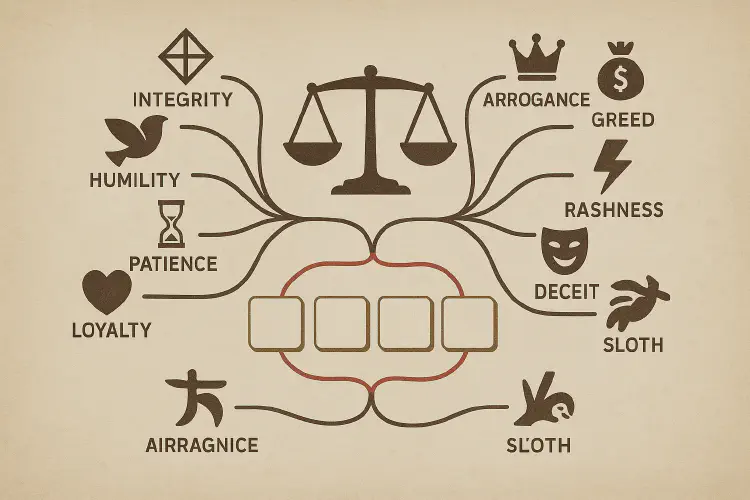
Many **chengyu (成语)** encode compact **moral lessons**. Knowing the virtue/vise behind each idiom helps you choose expressions that guide behavior, persuade readers, and structure stories.
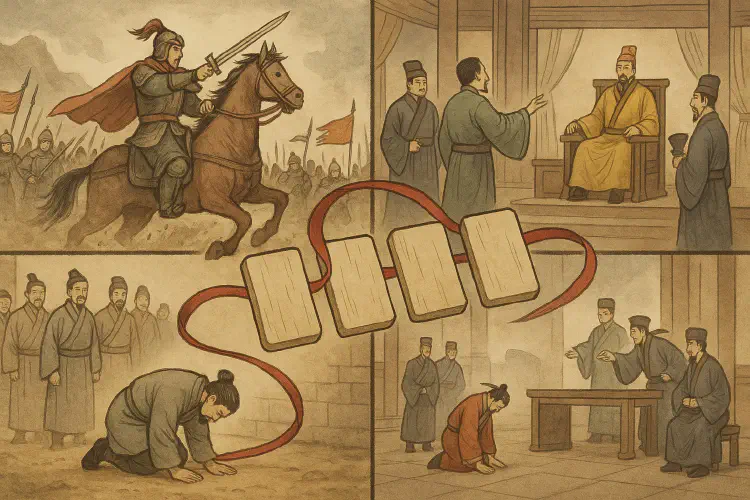
Many **chengyu (成语)** come straight from crisp historical moments—duels of wits at court, do-or-die battlefield gambits, and public acts of apology or resolve. Retelling the micro-story fixes the idiom’s meaning and helps you use it naturally.
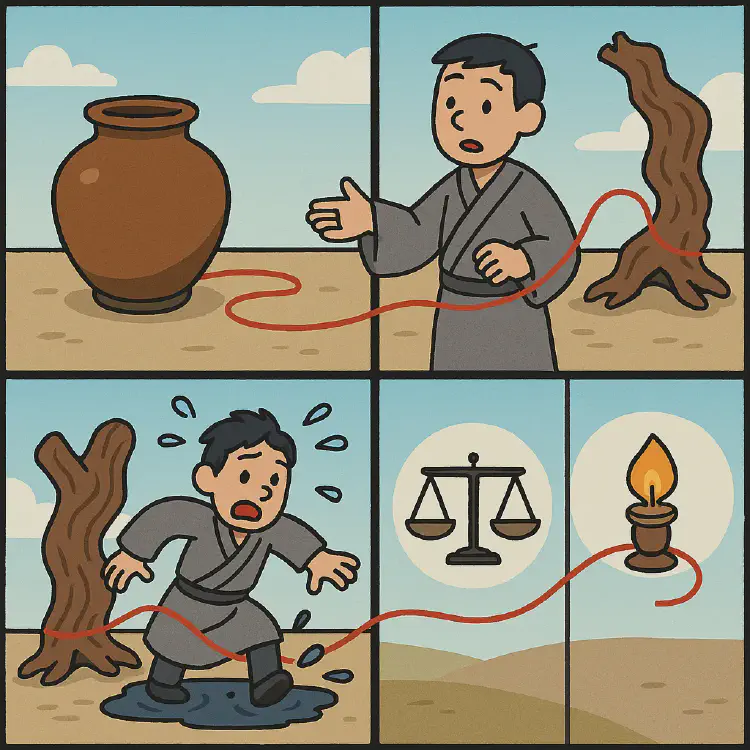
Think of each **chengyu (成语)** as a **four-character micro-story**: a vivid image + a turning point + a moral. Treating chengyu this way makes them easier to remember and deploy naturally in your own writing and speech.