Chengyu as mini-stories
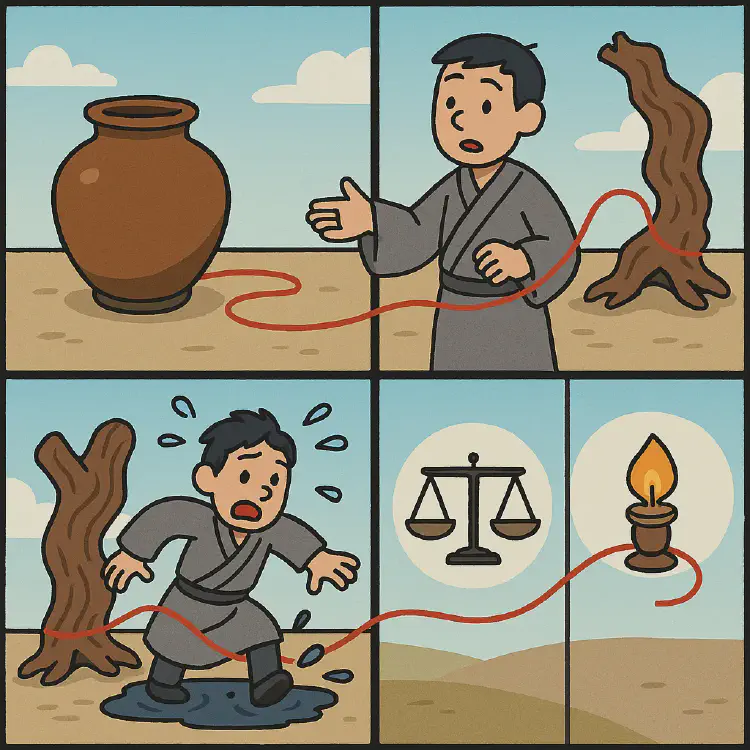
Think of each **chengyu (成语)** as a **four-character micro-story**: a vivid image + a turning point + a moral. Treating chengyu this way makes them easier to remember and deploy naturally in your own writing and speech.
- Chengyu Idioms
- 2 min read
What Does “Mini-Story” Mean?
A chengyu compresses a scene (who/where), a conflict or action, and a lesson into four characters. When you use it, readers/listeners unpack the hidden narrative instantly—like opening a zip file.
The 3-Beat Model You Can Reuse
- Image → a striking visual cue (snake with feet; back to the river).
- Move → a decision or mistake (overdo; cut retreat).
- Moral → the portable principle (simplicity; resolve).
Memory hack: say the beats aloud in 7–9 seconds, then land on the chengyu.
Before → After (How a Chengyu Replaces a Whole Paragraph)
-
Before (plain): We complicated the UI with extra steps and it confused users.
-
After (chengyu): 这个改版画蛇添足,用户更迷惑。
-
Before (plain): Under pressure we committed fully and won.
-
After (chengyu): 关键时刻我们破釜沉舟,扭转局面。
-
Before (plain): Theory looked great but failed in practice.
-
After (chengyu): 方案别纸上谈兵。
Mini-Story Library (One-Line Scenes)
- 亡羊补牢:羊丢后补圈 → 及时补救仍有效。
- 守株待兔:撞树得兔 → 靠运气不可取。
- 狐假虎威:狐借虎势巡林 → 仗势欺人难久。
- 背水一战:背河列阵 → 绝境激发斗志。
- 杯弓蛇影:杯中弓影似蛇 → 查证再下结论。
Turn Any Situation Into a Chengyu Mini-Story
- Identify the core move: over-tuning? delaying? decisive cutover?
- Pick a matching chengyu: 画蛇添足 for overdoing; 未雨绸缪 for prep; 同舟共济 for team grit.
- Write a 2-sentence micro-narrative, then compress with the idiom.
Example
- Micro-narrative: 我们早做演练,临场没有意外。
- Compression: 提前演练让上线水到渠成。
Placement Patterns (Where It Lands Best)
- Title lead-in:项目复盘:从纸上谈兵到实战落地。
- Sentence pivot:前期一波三折,但调度后顺利上线。
- Closing punch:……教训已明,今后未雨绸缪。
Tone & Register Controls
- Neutral–elevated:循序渐进、名正言顺、胸有成竹(适合书面/演讲)。
- Caution/critique:画蛇添足、指鹿为马、纸上谈兵(谨慎使用,避免人身化)。
- Colloquial:乱七八糟、狼吞虎咽(生活化,慎入正式文稿)。
Build-Your-Own (Template You Can Copy)
[Scene] 在(地点/时间),(角色)因为(动机)采取(行动)。
[Turn] 结果(出乎意料/符合预期)。
[Moral → Chengyu] 因此,(评价/原则)→ (成语)。
Example: 周五临时改需求,团队加班硬撑;回归测试暴露更多缺陷。经验:临门一脚别动大改 → 欲速则不达。
Practice: Compress These Into One Chengyu
- 会议上大家都在同时说话,效率低。→ 七嘴八舌
- 方案一改再改,越改越花哨。→ 画蛇添足
- 老师按不同基础分层教学,效果好。→ 因材施教
- 失败后不气馁,反而卷土重来。→ 卷土重来 / 卧薪尝胆(语气不同:前者回归反击;后者长训复兴)
Common Pitfalls (and Fixes)
- 堆叠过多:一段里用一条成语即可。
- 字面误读:永远先写白话释义再用成语。
- 语体不合:在科研/公文中用中性或褒义成语;批评类酌情弱化。
Takeaway: 把成语当作“四字微小说”。先用两三句铺陈场景,再以一条成语收束,你的表达会更短、更准、更有画面感。