Origin stories of famous chengyu
Behind many **chengyu (成语)** lies a compact story. Learning the **plot → image → moral** makes each idiom easier to remember and use accurately.
- Chengyu Idioms
- 2 min read
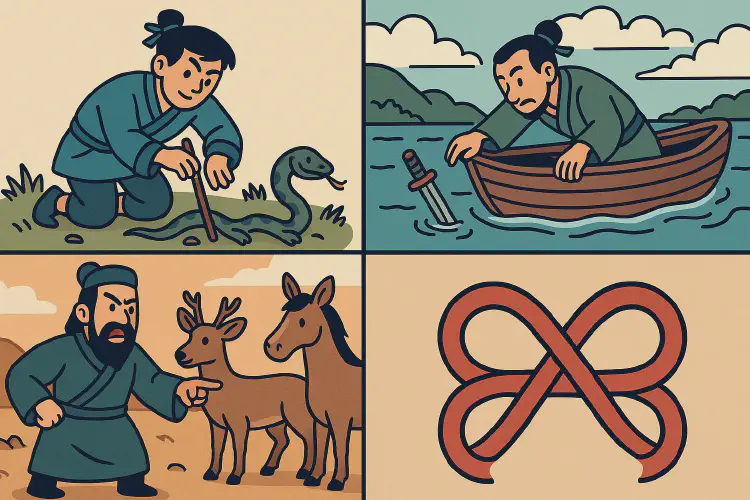
画蛇添足 (huà shé tiān zú) — Draw a Snake and Add Feet
A group finished a wine-drawing contest; one man drew fastest, then idly added feet to the snake and lost the prize. Moral: Overdo it and you spoil it.
Use: 方案已经足够,别画蛇添足。
刻舟求剑 (kè zhōu qiú jiàn) — Carve the Boat to Seek the Sword
A man dropped his sword from a boat and carved a mark on the hull to find it later—ignoring that both boat and river moved. Moral: Methods must fit changing conditions.
Use: 市场变了,还照旧做是刻舟求剑。
指鹿为马 (zhǐ lù wéi mǎ) — Call a Deer a Horse
Court official 赵高牵鹿进宫,硬说是马,借此测试群臣谁敢反驳。Moral: Twist facts to bully people; test loyalty through lies.
Use: 明明是错误数据,却硬说正确,简直指鹿为马。
破釜沉舟 (pò fǔ chén zhōu) — Break the Cauldrons, Sink the Boats
项羽下令毁炊具、沉战船,逼军无退路而奋战取胜。Moral: 背水决战,破釜成胜。
Use: 关键节点,我们必须破釜沉舟。
背水一战 (bèi shuǐ yī zhàn) — Fight with One’s Back to the River
韩信令军队背靠河岸,无路可退,反而激发斗志而胜。Moral: 置之死地而后生。
Use: 时间所剩无几,只能背水一战。
亡羊补牢 (wáng yáng bǔ láo) — Mend the Pen After the Sheep Are Lost
羊丢了,主人修好羊圈;有人笑他晚,他答宁迟勿缺。Moral: 犯错后及时补救仍然有益。
Use: 现在调整还来得及,亡羊补牢。
狐假虎威 (hú jiǎ hǔ wēi) — The Fox Borrows the Tiger’s Might
老虎带狐狸巡林,百兽畏虎不敢近;狐借虎威自夸。Moral: 倚仗他人权势来吓人。
Use: 别狐假虎威,用实力说话。
井底之蛙 (jǐng dǐ zhī wā) — Frog at the Bottom of a Well
井蛙只见井口方天,自夸所知;海龟谈大海,蛙方知天地广。Moral: 见识狭隘。
Use: 多走走看看,别做井底之蛙。
掩耳盗铃 (yǎn ěr dào líng) — Cover One’s Ears to Steal a Bell
贼想偷钟,怕响,就捂住自己的耳朵,以为听不见就没人听见。Moral: 自欺欺人。
Use: 忽视证据就是掩耳盗铃。
杯弓蛇影 (bēi gōng shé yǐng) — Snake’s Shadow in the Cup
宴饮时杯中映出弓影,客人以为是蛇而生病;后来知真相而愈。Moral: 惊弓之鸟,疑神疑鬼。
Use: 别被小道消息吓到,免得杯弓蛇影。
青梅竹马 (qīng méi zhú mǎ) — Green Plums and Hobby-Horse
童年相伴的男女,摘青梅、骑竹马,比喻青少年时期的两小无猜。Moral/Theme: 情感根植于童年相识。
Use: 他们是青梅竹马。
卧薪尝胆 (wò xīn cháng dǎn) — Sleep on Brushwood, Taste Gall
越王勾践卧薪尝胆、忍辱负重,终复国雪耻。Moral: 忍耐自励,厚积薄发。
Use: 创业初期需要卧薪尝胆。
水到渠成 (shuǐ dào qú chéng) — When Water Arrives, a Channel Forms
长期疏浚、引水到位,水到之处,自然成渠。Moral: 条件成熟,事自成。
Use: 准备充分,成功就会水到渠成。
学习法:故事→画面→四字
- 故事一句话:谁、何时、做了什么、结果如何。
- 核心画面:蛇加足、船刻记、鹿与马、背水阵等。
- 四字+用法:固定形式 + 你自己的例句。
Mini Practice (Match Story to Chengyu)
- 自欺欺人 → 掩耳盗铃
- 形势绝境反而致胜 → 背水一战
- 方法与环境脱节 → 刻舟求剑
- 因过度修饰而坏事 → 画蛇添足
- 借他人权势作威 → 狐假虎威
Takeaway: 把每条成语背后的情节与画面记住,你就能在写作和对话中自然、准确地调用这些浓缩的文化密码。