Using chengyu in fables
Fables are short, moral stories with talking animals or personified objects. Because **chengyu (成语)** are themselves condensed morals and images, they fit fables naturally—either as the *title/ending moral* or as *scene beats* within the plot.
- Chengyu Idioms
- 2 min read
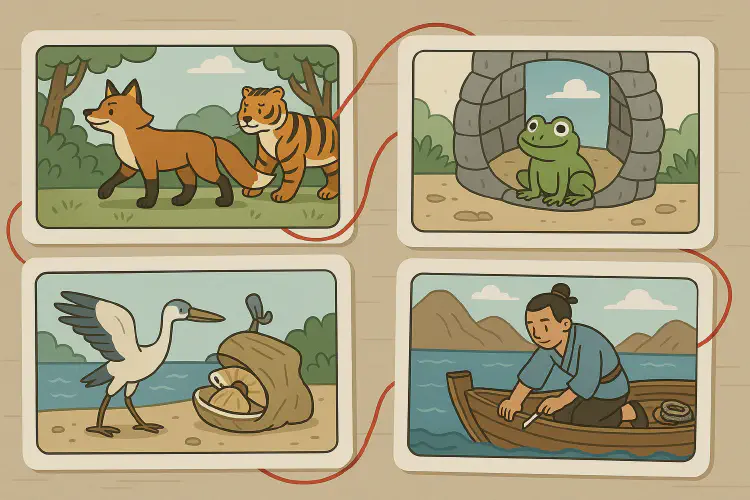
Why Chengyu Work Perfectly in Fables
Chengyu compress image + lesson into four characters, mirroring a fable’s scene + moral. Using them helps you: (1) give your tale a memorable title; (2) summarize the moral in one phrase; (3) keep language concise and vivid.
Simple Frameworks for Chengyu Fables (Beginner-Friendly)
- Pattern A: Situation → Attempt → Twist → Moral (Chengyu)
Use the chengyu as the final line. - Pattern B: Prologue (Chengyu) → Story Illustrates → Echo (Chengyu)
Start and end with the same chengyu to reinforce the lesson. - Pattern C: Three Beats, Three Images
Each beat advances toward the idiom’s meaning; the last beat states the chengyu.
Model Mini-Fables with High-Frequency Chengyu
1) 画蛇添足 — “Adding Feet to the Snake”
春猎归来,村里比画蛇。阿甲最快,却嫌空白,加上“脚趾”。众人笑曰:“蛇何来足?”奖杯旁落。Moral: 画蛇添足—过度反而坏事。
2) 守株待兔 — “Waiting by the Stump”
农人见兔撞树而亡,得之甚易。次日弃耕守株,终日无获。邻人笑,他却不悟。Moral: 守株待兔—不思进取只等运气。
3) 胸有成竹 — “Bamboo Already in the Heart”
两位画师同题。甲急就章,竹节歪斜;乙先观竹影、悟风势,落笔从容。评委叹曰:此人胸有成竹。Moral: 成功来自周全构思。
4) 狐假虎威 — “Fox Borrowing Tiger’s Might”
虎出巡,百兽皆避。狐自夸众畏己,离虎三步便被犬吠逐。Moral: 狐假虎威—权势非己,虚张难久。
5) 亡羊补牢 — “Mend the Pen After the Sheep Are Lost”
牧童疏忽失羊,急修羊圈,邻叟称善。来年群羊安稳。Moral: 亡羊补牢—改错不晚于现在。
6) 井底之蛙 — “Frog at the Bottom of a Well”
井蛙夸天空如盘,海客言海广无涯。蛙疑,跃出井沿,方知天地大。Moral: 井底之蛙—眼界需拓展。
Building Your Own Fable: A Fillable Template
- Title (often the Chengyu itself): e.g., 一举两得
- Characters: Keep 2–3 (animal or personified objects).
- Setting: One clear place (forest, village, market).
- Plot (3–5 sentences):
- Present a problem or desire.
- Show an attempt/decision.
- Add a twist (success or failure).
- End with the chengyu as the moral line.
- Sample:
樵夫想省力砍柴,又想赶在雨前回家。他绕路取捷,顺便挑药草回村。黄昏前抵家,柴药皆得。Moral: 一举两得。
Where to Place the Chengyu for Maximum Effect
- Title: Signals the theme up front (易懂).
- Final sentence: Delivers the punchy moral (最常见).
- Dialogue tag: Put it in a mentor/elder’s line for gravitas.
- Narrator aside: Use once for tone, avoid stacking multiple idioms.
Language Tips for Beginner Writers
- One chengyu per fable is usually enough.
- Keep verbs concrete (run, wait, mend, sketch) to let the idiom shine.
- Use AABB/ABCD rhythm intentionally (e.g., 对比、递进) to echo the chengyu’s cadence.
- Prefer present or simple past consistently; avoid tense hopping.
Quick Practice (Choose the Best Chengyu Moral)
- 渔夫急于求利,加网太密,小鱼未逃,大鱼不来 → 画蛇添足 / 欲速则不达(更贴切:欲速则不达)
- 木匠先量后锯,做工稳妥 → 胸有成竹
- 小贩夸口靠城主庇护敲诈 → 狐假虎威
- 误判路线,纠正后按时到达 → 亡羊补牢
Upgrade Your Storytelling (Intermediate)
- Counter-fable: 用同一成语写正反两版情节(成功与失败),比较语气效果。
- Chain fables: 连写三则小故事,结尾都落在同一成语上,展示不同角度的阐释。
- Modernization: 把古意换成现代场景(地铁、校园、办公室),但仍以成语收束。
Takeaway: 让成语成为“题眼”和“落点”。用简洁情节托举四字精义,你的寓言会既好读又难忘。