Structure: four-character format
Most **chengyu (成语)** appear in a compact **four-character** (四字) mold. This form isn’t just cosmetic—it encodes balance, rhythm, and meaning density that make chengyu memorable and powerful.
- Chengyu Idioms
- 3 min read
Article 3 of 5 in Introduction-to-Chengyu/
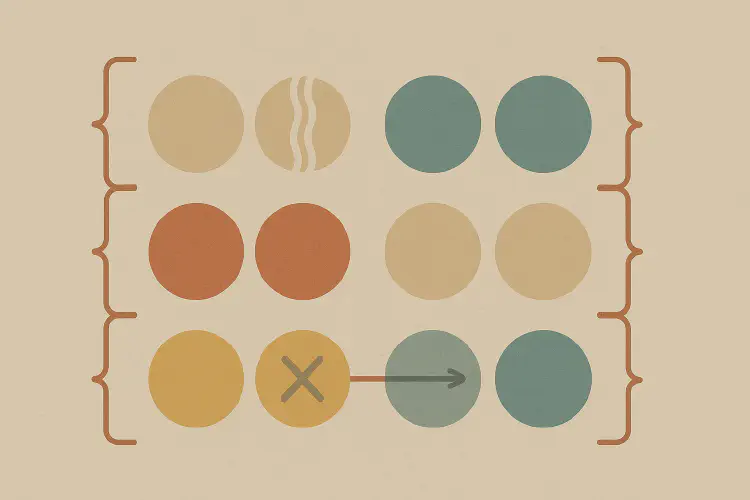
Why the Four-Character Structure Matters
The four-character template optimizes brevity, symmetry, and rhythm. It packs a story or principle into a small, balanced unit that’s easy to recall, quote, and slot into sentences without extra grammar marking.
Common Structural Patterns (Form & Semantics)
- AABB (reduplication for intensity/extent)
亭亭玉玉 → rare; more typical examples include 津津有味 (with keen relish), 历历在目 (vivid before one’s eyes). Reduplication adds emphasis and a rhythmic beat. - ABAB (verb-object or verb-verb iteration)
讨论讨论 (not a fixed chengyu) shows pattern logic; canonical chengyu with ABAB flavor are fewer, but the alternation idea helps recognize balance and iterative sense. - ABAC (repetition with a twist)
一见如故 (A=一, B=见, A′=如, C=故) — as if old friends at first sight. The repeated slot creates parallel resonance between parts. - ABCD (semantic progression or contrast)
自相矛盾 (self-contradictory), 背水一战 (fight with your back to the river), 刻舟求剑 (carve the boat to seek the sword). Each character pushes the image forward with tight semantic linkage. - Antithetical/Parallel Pairing
改弦易辙 (change strings, switch tracks), 承前启后 (inherit the past, open the future). Balanced halves often present contrast or cause–effect.
Grammatical Behaviors in the Four-Character Shell
- Predicate use (verbal/adjectival):
他做事循序渐进。— He proceeds step by step. - Attributive modifier:
刻不容缓的任务 — a pressing task. - Adverbial role:
理直气壮地提出意见 — state views with justified confidence. - Subject/Object (less common but possible):
亡羊补牢并非为时已晚。— ‘Mend the pen after the sheep are lost’ is not too late.
Rule of thumb: The form is fixed. Do not change characters, order, or insert particles; doing so breaks the idiom’s integrity.
Sound & Rhythm: Why Four Feels Right
- Prosodic balance: Two bisyllabic beats (2+2) or a 1–2–1 stress feel make chengyu pleasing to recite.
- Euphony supports memory: Symmetry and internal echo (reduplication, parallel nouns/verbs) act as mnemonics.
Meaning Compression Inside Four Characters
- Ellipsis of function words: Classical brevity omits markers like 的/了/在, yet the idiomatic reading stays clear.
- Packed imagery: One vivid scene (e.g., 杯弓蛇影, cup-bow-sees-snake) implies a general principle (fear-driven misperception).
Typical Substructures to Notice
- Time/sequence pairs: 先…后… compressed as 承前启后.
- Cause–effect chains: Image → lesson, e.g., 画蛇添足 → ruin by overdoing.
- Contrastive parallels: 同甘共苦 (share sweetness and bitterness).
Pitfalls Learners Should Avoid
- Not every 4-char phrase is a chengyu: Internet catchphrases may mimic the form without classical pedigree.
- Don’t inflect or paraphrase inside the idiom: Keep order and diction intact.
- Over-literal translation: Always confirm the idiomatic sense.
Quick Practice (Spot the Structure)
- 自相矛盾 → ABCD with internal self–object contrast.
- 狐假虎威 → ABCD narrative chain (agent → borrowed power → displayed might).
- 胸有成竹 → ABCC-like imagery where 成竹 crystallizes the outcome envisioned.
Takeaway: The four-character mold blends fixed form, balanced prosody, and dense meaning, enabling chengyu to function as elegant, plug-and-play units across Chinese sentences.