Chengyu about animals
Animal imagery in **chengyu (成语)** turns vivid creatures into memorable lessons. Learn the literal picture, idiomatic sense, and a natural sentence so you can use each expression confidently.
- Chengyu Idioms
- 2 min read
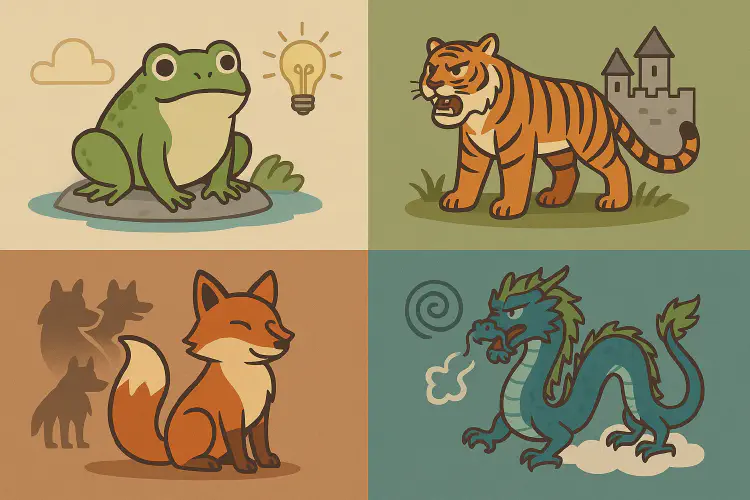
High-Utility Animal Chengyu (Meaning + Example)
-
狐假虎威 (hú jiǎ hǔ wēi) — the fox borrows the tiger’s might → Bullying by borrowed power; relying on a backer.
例:别狐假虎威,靠实力说话。 -
井底之蛙 (jǐng dǐ zhī wā) — frog at the bottom of a well → Narrow perspective; limited vision.
例:多交流别做井底之蛙。 -
对牛弹琴 (duì niú tán qín) — play the lute to a cow → Speak over someone’s head; mismatch of message & audience.
例:别用术语,免得对牛弹琴。 -
鸡毛蒜皮 (jī máo suàn pí) — chicken feathers and garlic skins → Trivial matters.
例:别为鸡毛蒜皮的小事吵架。 -
闻鸡起舞 (wén jī qǐ wǔ) — hear the rooster, rise to drill → Self-discipline; train at dawn.
例:他坚持闻鸡起舞,每天晨跑。 -
画蛇添足 (huà shé tiān zú) — draw a snake and add feet → Ruin something by overdoing it.
例:设计别画蛇添足,保持简洁。 -
守株待兔 (shǒu zhū dài tù) — wait by the stump for a rabbit → Rely on luck; be passive.
例:找工作不能守株待兔。 -
如鱼得水 (rú yú dé shuǐ) — like a fish in water → In one’s element.
例:他在新团队如鱼得水。 -
群龙无首 (qún lóng wú shǒu) — a group of dragons with no head → Leaderless; disorganized.
例:项目群龙无首,需要负责人。 -
狼吞虎咽 (láng tūn hǔ yàn) — wolf it down, tiger gulp → Gobble food; eat ravenously (colloquial).
例:别狼吞虎咽,慢点吃。 -
鹤立鸡群 (hè lì jī qún) — a crane standing among chickens → Stand out from the crowd (positive).
例:她的作品鹤立鸡群。 -
兔死狐悲 (tù sǐ hú bēi) — when the rabbit dies, the fox grieves → Sympathy among those of the same kind; self-interested pity.
例:那只是兔死狐悲,别被表象迷惑。 -
叶公好龙 (Yè gōng hào lóng) — Lord Ye loves dragons (in name only) → Pretend to love something; fear the real thing.
例:别叶公好龙,说爱挑战真来就退缩。 -
龙虎斗 (lóng hǔ dòu) — dragon–tiger duel → Titans clash; intense rivalry.
例:两队决赛堪称龙虎斗。
Quick Thematic Clusters
- 视角/理解:井底之蛙、对牛弹琴、叶公好龙
- 作风/效率:闻鸡起舞、画蛇添足、守株待兔
- 团队/组织:群龙无首、鹤立鸡群
- 关系/权势:狐假虎威、兔死狐悲、龙虎斗
- 日常口语:鸡毛蒜皮、狼吞虎咽
Placement Tips
- 多作谓语/状语/定语:
- 谓语:这个方案画蛇添足。
- 状语:他闻鸡起舞地练习。
- 定语:一个群龙无首的团队。
Mini Dialogues (Plug-and-Play)
-
A:解释太专业了。
B:对不起,刚才有点对牛弹琴。 -
A:咱们等机会吧?
B:别守株待兔,先做小实验。 -
A:她新岗位适应得如何?
B:简直如鱼得水。
Micro-Practice (Choose the Best Chengyu)
- 领导不定,大家无所适从 → 群龙无首
- 自夸懂艺术,真见作品就退缩 → 叶公好龙
- 把简单方案越改越复杂 → 画蛇添足
- 讲给新手听还用学术术语 → 对牛弹琴
Common Pitfalls
- 过度直译:成语讲寓意,别按动物表面理解。
- 语境失配:如 狼吞虎咽 偏口语,正式文书慎用。
- 堆砌:同一语境只选一个最贴切的成语。
Takeaway: 先掌握 8–10 个高频动物成语(如 狐假虎威、井底之蛙、对牛弹琴、闻鸡起舞、画蛇添足、守株待兔、如鱼得水、群龙无首),你的表达会更形象、更地道。