Chengyu about body parts
Body-part imagery in **chengyu (成语)** turns feelings, thinking, speech, and action into vivid four-character snapshots. Learn the literal picture, idiomatic meaning, and a natural example so you can sound precise and expressive.
- Chengyu Idioms
- 2 min read
Article 3 of 5 in Thematic-Chengyu-Groups/
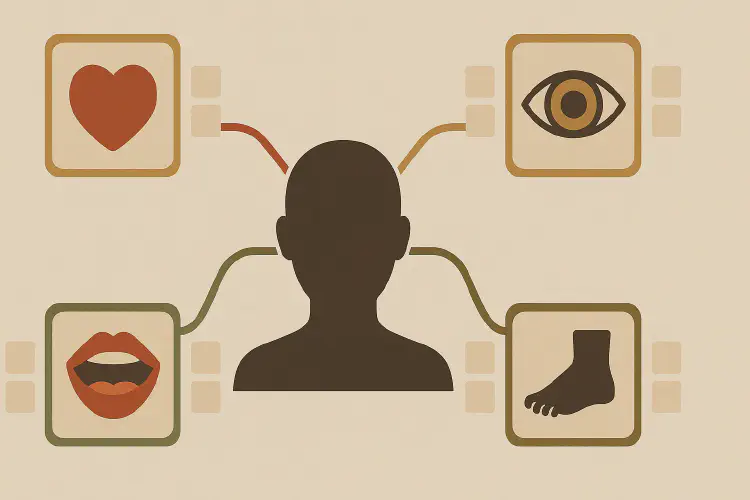
Heart & Mind (心)
- 一心一意 (yì xīn yí yì) — one heart, one intent → wholeheartedly
例:她一心一意准备考试。 - 三心二意 (sān xīn èr yì) — three hearts, two intentions → half-hearted; distracted
例:别三心二意,先把这章学完。 - 心安理得 (xīn ān lǐ dé) — heart at peace, reason satisfied → with a clear conscience
例:按规则办事才心安理得。 - 心急如焚 (xīn jí rú fén) — heart anxious like burning → extremely anxious
例:孩子发烧,家长心急如焚。
Mouth & Speech (口/舌)
- 口是心非 (kǒu shì xīn fēi) — mouth says yes, heart says no → say one thing, mean another
例:他表面同意,其实口是心非。 - 口若悬河 (kǒu ruò xuán hé) — mouth like a hanging river → talk nonstop; very eloquent
例:演讲时他口若悬河,很有感染力。 - 七嘴八舌 (qī zuǐ bā shé) — seven mouths, eight tongues → everyone talking at once
例:会议上大家七嘴八舌地提意见。 - 口干舌燥 (kǒu gān shé zào) — dry mouth, parched tongue → parched from talking/heat
例:讲了两小时,我都口干舌燥了。
Eyes & Ears (眼/耳/眉)
- 眼高手低 (yǎn gāo shǒu dī) — eyes high, hands low → aim high, skills low
例:别眼高手低,先打好基础。 - 眼明手快 (yǎn míng shǒu kuài) — eyes sharp, hands quick → quick-witted and deft
例:他眼明手快,及时接住了杯子。 - 耳闻目睹 / 耳濡目染 (ěr wén mù dǔ / ěr rú mù rǎn) — hear & see personally / be subtly influenced by hearing/seeing
例:在书香家庭耳濡目染,她从小爱读书。 - 眉开眼笑 (méi kāi yǎn xiào) — brows open, eyes smiling → beaming with joy
例:收到录取通知他眉开眼笑。
Hands & Feet (手/足)
- 手忙脚乱 (shǒu máng jiǎo luàn) — hands busy, feet in chaos → in a flap; flustered
例:第一次直播我有点手忙脚乱。 - 手不释卷 (shǒu bù shì juàn) — hand never leaves the scroll → never stop reading/studying
例:他暑假手不释卷。 - 手足无措 (shǒu zú wú cuò) — hands and feet without a plan → at a loss
例:突发状况让新人手足无措。 - 脚踏实地 (jiǎo tà shí dì) — feet step on solid ground → down-to-earth; practical
例:团队脚踏实地推进项目。
Head, Face, Chest, Back (头/面/胸/背)
- 头头是道 (tóu tóu shì dào) — every point has its path → well-organized and logical
例:她的汇报头头是道。 - 面红耳赤 (miàn hóng ěr chì) — face red, ears scarlet → blushing; very angry/embarrassed
例:争论到最后两人面红耳赤。 - 面目全非 (miàn mù quán fēi) — appearance entirely changed → changed beyond recognition
例:旧城改造后面目全非。 - 胸有成竹 (xiōng yǒu chéng zhú) — bamboo formed in the chest → plan well in mind; confident
例:她对答胸有成竹。 - 背道而驰 (bèi dào ér chí) — run in opposite directions → go against; be at odds
例:做法与目标背道而驰。
Quick Thematic Clusters
- 情绪与态度:心安理得、心急如焚、眉开眼笑、面红耳赤
- 表达与沟通:口若悬河、七嘴八舌、口是心非
- 能力与行动:眼高手低、眼明手快、脚踏实地、手不释卷
- 组织与方向:头头是道、面目全非、背道而驰、手足无措
Placement & Register Tips
- 多作谓语/状语/定语:
- 谓语:他的陈述头头是道。
- 状语:她脚踏实地地推进研究。
- 定语:一个面目全非的旧厂房。
- 语气:心急如焚、手忙脚乱色彩偏急;口是心非带批评意味;正式写作更宜用胸有成竹、头头是道等中性/褒义表达。
Mini Dialogues
-
A:方案定了吗?
B:别急,我胸有成竹,今晚给你初稿。 -
A:第一次主持会紧张吗?
B:开始手忙脚乱,后来就头头是道了。 -
A:他怎么又改主意?
B:表面同意,实际上口是心非。
Micro-Practice(Choose the Best Chengyu)
- 目标高但动手能力弱 → 眼高手低
- 说话滔滔不绝 → 口若悬河
- 做事踏实可靠 → 脚踏实地
- 变化太大认不出来 → 面目全非
- 慌乱到不知道怎么办 → 手足无措
Learning Tips
- 对比记忆:一心一意 ↔ 三心二意;眼高手低 ↔ 脚踏实地。
- 造句输出:把每条写进你的一天(学习、会议、锻炼)。
- 少而精:每次对话只用一条,保证自然度。
Takeaway: 掌握一组高频“身体”成语(如 一心一意、口若悬河、眼高手低、手忙脚乱、脚踏实地、胸有成竹、面目全非),你的中文将更生动、凝练、有画面感。