Examples from Confucian classics
Confucian classics such as the *Analects (Lúnyǔ)*, *Mencius (Mèngzǐ)*, and the *Book of Rites (Lǐjì)* generated many four-character expressions. These chengyu encode study habits, moral cultivation, social order, and ritual propriety.
- Chengyu Idioms
- 2 min read
Article 2 of 5 in Chengyu-and-Classical-Chinese/
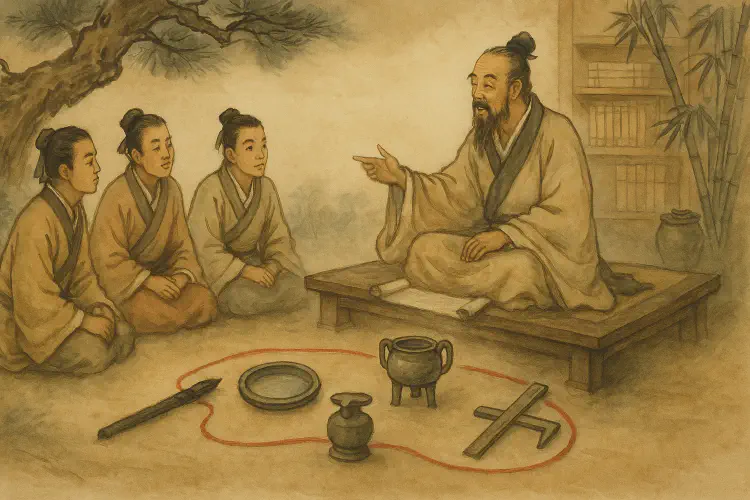
Study & Teaching Ideals (Analects)
- 温故知新 (wēn gù zhī xīn) — review the old, know the new → Consolidate past learning to gain new insight.
Use: 复盘一周所学,做到温故知新。 - 学而不厌 (xué ér bù yàn) — study without weariness → Be tireless in learning.
Use: 她对语言学学而不厌。 - 诲人不倦 (huì rén bù juàn) — teach others without fatigue → Be tireless in teaching.
Use: 老师诲人不倦,学生受益匪浅。 - 因材施教 (yīn cái shī jiào) — teach according to the student → Differentiate instruction.
Use: 班级水平不同,要因材施教。 - 举一反三 (jǔ yī fǎn sān) — infer three from one → Generalize from a single example.
Use: 通过一个题型举一反三。
Moral Self-Cultivation & Conduct (Analects)
- 克己复礼 (kè jǐ fù lǐ) — conquer the self, return to ritual propriety → Restrain the self to meet ethical/ritual norms.
Use: 公共场合注意克己复礼。 - 见贤思齐 (jiàn xián sī qí) — see the worthy and think to equal them → Emulate the virtuous.
Use: 身边有榜样,自然见贤思齐。 - 择善而从 (zé shàn ér cóng) — choose the good and follow it → Adopt what is right.
Use: 面对意见分歧,我们择善而从。 - 三思而行 (sān sī ér xíng) — thrice consider, then act → Deliberate before acting.
Use: 关键决定要三思而行。 - 一以贯之 (yī yǐ guàn zhī) — one thread runs through it → A guiding principle unifies all.
Use: 团队价值一以贯之,执行才稳定。
Social Order, Names, and Governance (Analects/Mencius)
- 名正言顺 (míng zhèng yán shùn) — when names are correct, words flow smoothly → With roles/terms properly defined, action is justified and smooth.
Use: 先明确职责,做到名正言顺。 - 礼崩乐坏 (lǐ bēng yuè huài) — rituals collapse, music decays → Moral/cultural order in disarray.
Use: 若失去共识,社会易至礼崩乐坏。
Ritual Propriety & Reciprocity (Book of Rites)
- 礼尚往来 (lǐ shàng wǎng lái) — ritual esteems reciprocity → Courtesy should be returned.
Use: 承蒙招待,这次我请客,礼尚往来。 - 慎终追远 (shèn zhōng zhuī yuǎn) — be careful at the end, pursue the distant past → Respect rites for the deceased; honor ancestors.
Use: 传统节日里人们慎终追远。 - 中庸之道 (zhōng yōng zhī dào) — the Way of the Mean → Balance and appropriateness as a guiding path.
Use: 处理分歧要守中庸之道。
How to Learn These Efficiently
- Triad method: Source line → four-character form → modern usage sentence.
- Contrast pairs: 如 学而不厌 vs 诲人不倦(学与教);见贤思齐 vs 择善而从(榜样与抉择)。
- Minimal set for fluency: 温故知新、因材施教、见贤思齐、三思而行、名正言顺、礼尚往来—掌握这 6 条,即可在学习、合作、礼仪场景中自然使用。
Micro-Practice (Fill & Paraphrase)
- 老师针对不同学生调整方法,这叫____。→ 因材施教
- 做决定前别冲动,应当____。→ 三思而行
- 项目职责明确后推进更顺,这就是____。→ 名正言顺
Takeaway: Confucian classics supply a core toolbox of chengyu that guide learning, self-discipline, social roles, and ritual propriety. Learn each with its story, then practice in short, modern sentences.